
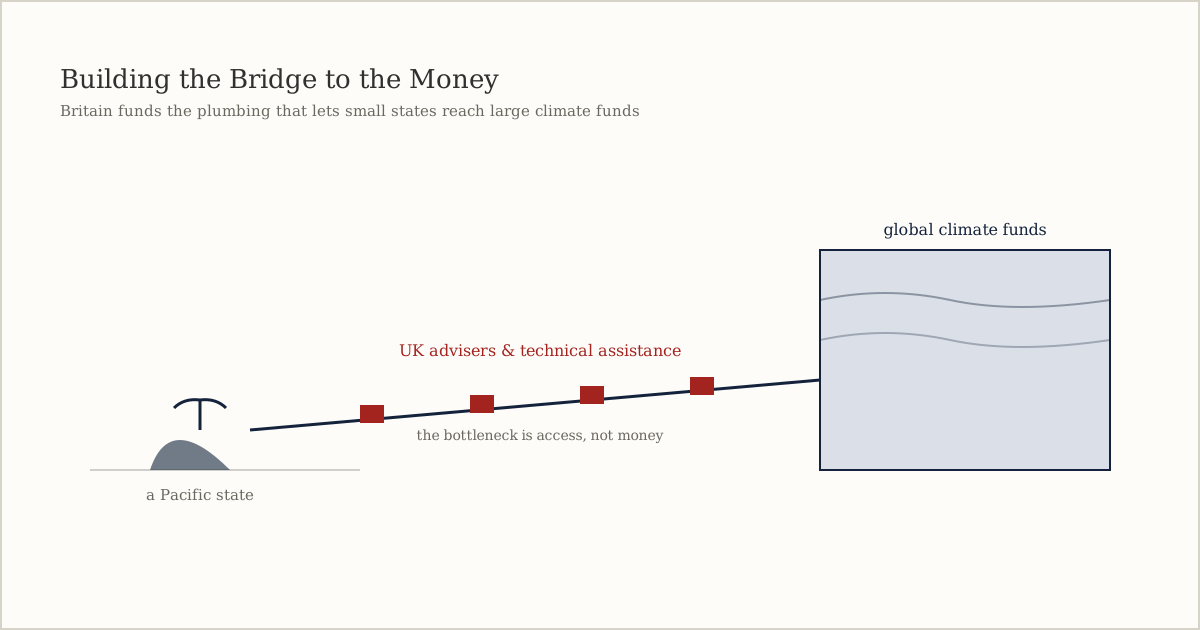
The hardest thing about global climate finance, for a Pacific island, is not that the money does not exist. It is that reaching it requires accredited entities, bankable proposals, and technical paperwork that a government of a few hundred officials cannot easily produce. Britain has decided that this bottleneck — access, not availability — is where a mid-sized donor can do the most good.
The UK's approach is deliberately indirect. Rather than write only checks, it is funding the machinery that lets Pacific states pull down larger pools of money from institutions such as the Green Climate Fund. That includes embedding climate-finance advisers inside Pacific governments to help them apply for and absorb funding, and £1.3 million of technical support to help establish the Pacific Resilience Facility, a regionally governed fund designed to give island countries a more reliable channel to long-term climate money. A further £14 million in new funding, announced in 2025, builds on the UK's Climate Action for a Resilient Asia program.
The logic is sound and, in places, already working. An accredited national entity or a well-drafted proposal can unlock multiples of the sum spent producing it, and advisers who transfer that capacity leave something behind when they go. For governments that have watched climate pledges arrive as announcements and never as disbursements, help navigating the system is not a consolation prize; it is often the binding constraint.
The number that complicates the story
Britain makes this case while cutting the resource behind it. The UK met its third International Climate Finance commitment — at least £11.6 billion over the five years to 2025–26 — but its overall aid budget has been reduced sharply as the government redirected spending toward domestic and defense priorities. Technical assistance is cheaper than grants, and a strategy built around helping others access finance can, read uncharitably, look like a way to be seen to lead on climate while spending less of one's own money on it.
The UK is helping to unlock wider sources of climate finance, its government says, including through advisers embedded in Pacific governments to strengthen their ability to access and absorb funding.
Both readings can be true. Advisory support genuinely raises the amount of finance a small state can capture, and it is also a low-cost form of influence at a moment when Britain, post-Brexit, is looking for relevance in a region where it has history but little current weight. The Green Climate Fund held a board meeting in Papua New Guinea, a nod to the Pacific's place in the global negotiations, and the UK has been keen to be seen shaping that agenda.
The measure that matters is downstream, and it is checkable. Does a country with a British-funded adviser secure more climate finance than it did before, and does it keep securing it once the adviser's posting ends? Does the Pacific Resilience Facility move money faster and with fewer conditions than the donor-run funds it is meant to improve on? Access is a real bottleneck, and unlocking it is a real contribution. It is also the cheapest kind of help to give — which is both why it is clever, and why the Pacific will judge it by what actually arrives in the accounts.