
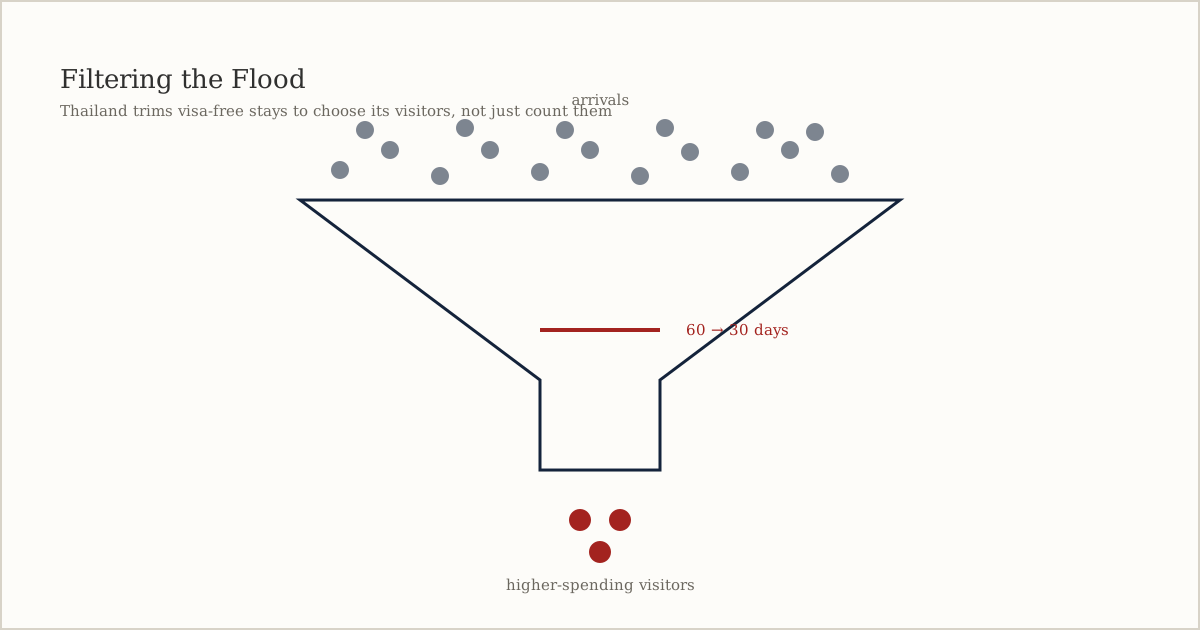
Two years ago Thailand was competing to be the easiest country in Asia to enter and stay in, stretching visa-free access to 60 days to pull in as many visitors as possible. On May 19, 2026, its cabinet decided that generosity had a downside worth reversing.
The new rules, approved that day and set to take effect after publication in the Royal Gazette, cut visa-free stays for many nationalities from 60 days to around 30, with some countries dropped to 15. The visa-on-arrival program shrinks from 31 eligible countries to four: Azerbaijan, Belarus, Serbia and India. A policy built to maximize arrivals is being rebuilt to filter them.
The official reasoning is security, not snobbery. Long visa-free windows, the government says, were being exploited — used as cover for unauthorized work and other activity outside the terms of a tourist stay. A government spokesperson framed the change as prioritizing security while insisting tourism remained an indispensable pillar of the economy. The unstated calculation is about value: Thailand would rather have fewer visitors who spend than more who overstay.
The timing is the risk
What makes the move a gamble is when it arrives. Tourism forecasts have softened, and the sector still carries an outsized share of Thai output and employment. Tightening the door to visitors at the moment demand is already cooling is the kind of decision that looks disciplined if the high-spending travellers materialize and reckless if they do not. The country is betting it can trade volume for quality without ending up with less of both.
Every destination that grows on cheap, easy access eventually resents what cheap, easy access brings. The hard part is filtering the crowd without emptying the room.
The categories Thailand is trying to sort are not tidy. Digital nomads on long stays, medical tourists, retirees on property purchases, and short-haul holidaymakers all move through the same visa channels, and a rule that deters an overstaying casual worker can equally deter a remote worker who would have spent months and money in Chiang Mai. Bangkok, Phuket and Chiang Mai have spent a decade straining under sheer numbers; the new framework is an attempt to manage the pressure by composition rather than volume. It also risks signaling, to precisely the mobile professionals other countries are courting, that Thailand has become less welcoming.
From a numbers game to a mix game
For two decades Thai tourism policy had one lever and one metric: make entry easier, count the arrivals. The 2026 rules abandon that in favor of a harder, more political task — deciding which visitors the country actually wants and building the immigration plumbing to prefer them. That is a bet that the Thai economy can extract more from a curated stream of higher-value guests than from an open flood.
The evidence will show up in two figures moving in opposite directions: arrivals, which the new rules are designed to trim, and spending per visitor, which they are designed to lift. If the second rises faster than the first falls, Thailand will have proved that a mature tourism economy can choose its customers. If arrivals drop and spending does not climb to match, it will have tightened the door on the visitors it still needs, at the worst possible moment to do it.