
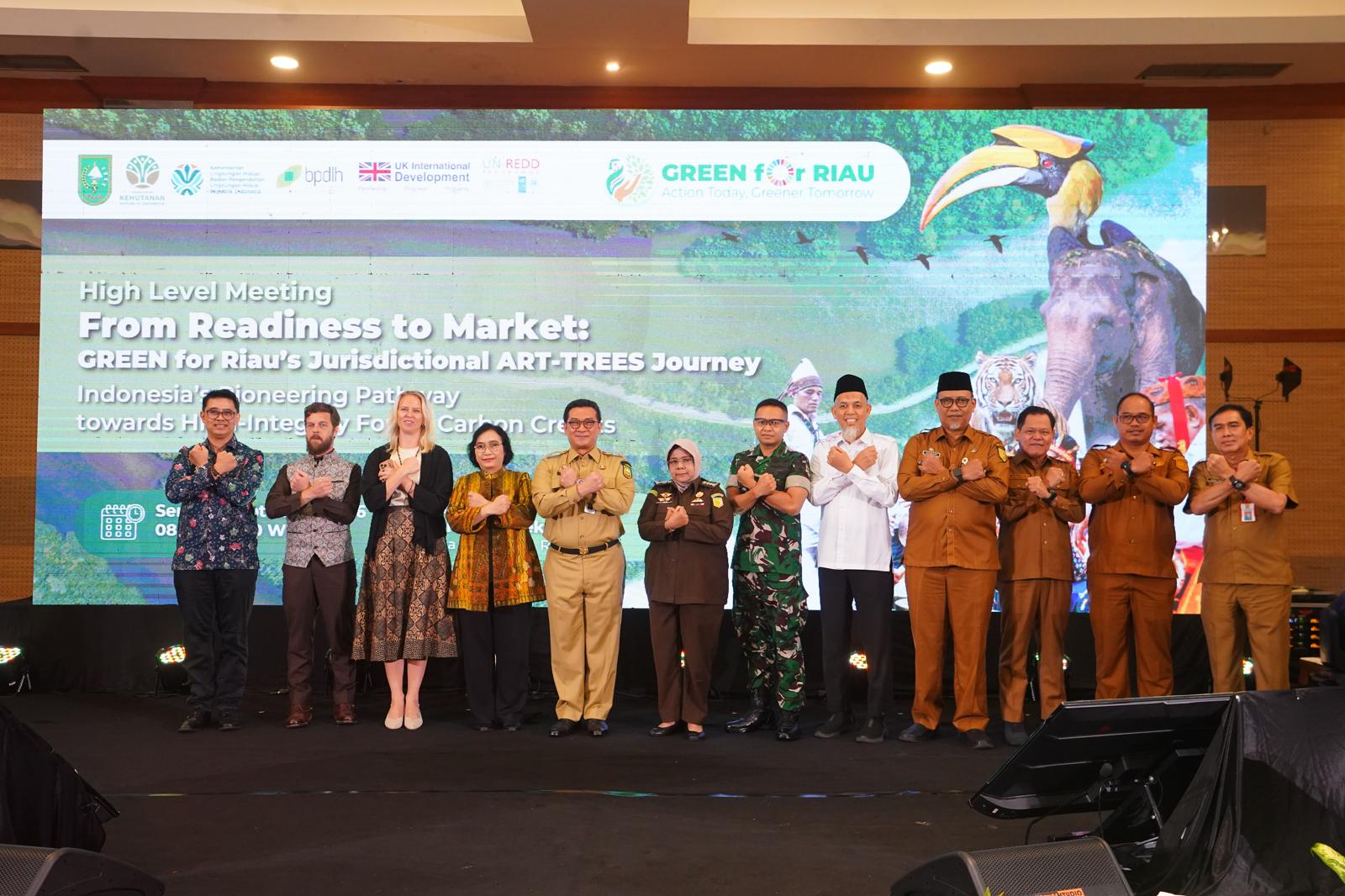
PEKANBARU, Indonesia — Sumatra is deep into its dry season, the stretch of the year when Riau’s peatlands can catch and the haze drifts back over the province. It is against that recurring risk that the provincial government is trying to build something slower than an emergency fire response.
Riau said Monday it had received an endorsement letter from Indonesia’s Ministry of Forestry backing its plan to apply the REDD+ Environmental Excellence Standard, known as TREES, across the entire province rather than project by project. REDD+, for reducing emissions from deforestation and forest degradation, is the U.N.-backed approach it rests on; the standard is administered by the Architecture for REDD+ Transactions (ART). If Riau follows through, it would be the first Indonesian province to implement ART-TREES, part of the country’s wider effort to build what officials call a high-integrity market for forest carbon.

The endorsement is a readiness milestone rather than a finished result, and it opens the way for Riau to keep assembling the machinery such a market requires: a provincial forest reference emission level consistent with Indonesia’s national baseline, a monitoring system, social and environmental safeguards, and rules for “nesting”—reconciling the carbon accounting of the province, individual projects and communities so the same ton of emissions is counted once. A draft guidance note setting out that framework was to be presented for consultation during two days of meetings in Pekanbaru on September 7 and 8.
“Our ambition is to protect forests and peatlands while creating real opportunities for communities,” said S.F. Hariyanto, Riau’s acting governor, in the announcement. “We aim to ensure that climate finance rewards measurable results, upholds strong safeguards and supports the people whose stewardship makes those results possible.”
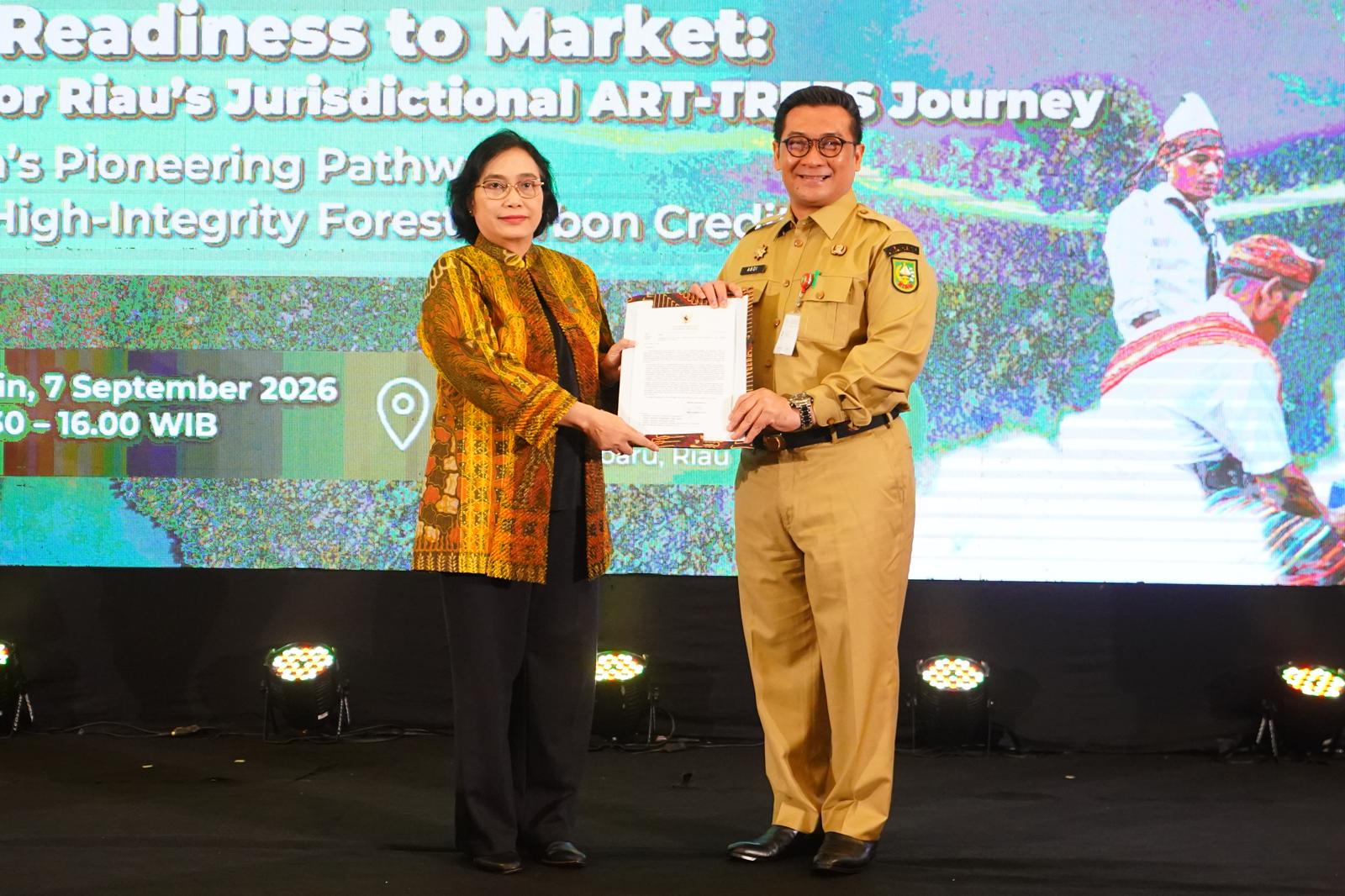
The ministry paired its support with a clear emphasis on integrity. “Environmental and social integrity must be a foundation from the outset,” said Haruni Krisnawati, expert staff to the minister for climate change, in the same announcement, pointing to a reference level and monitoring consistent with the national system, safeguards and “clear benefit-sharing.” Riau’s experience, she added, could be “an important lesson for other provinces.”
Indonesia’s social-inclusion policy is another test of that integrity. “Women are not only recipients of climate impacts, but also agents and leaders of change,” said Arifatul Choiri Fauzi, Indonesia’s minister of women’s empowerment and child protection. “Green development must ensure that women and vulnerable groups are engaged, heard, protected, and able to benefit.”
Why the province matters is partly geography. Riau holds about 4.9 million hectares of peatland, carbon-dense ground that emits heavily when drained or burned. Protecting it, the government argues, is also a question of water and public health, not only of tradable credits.
“Protecting these forests is about far more than carbon; it is about water, public health, and long-term resilience for the people of Riau,” said Gita Sabharwal, the United Nations resident coordinator in Indonesia. Riau’s model, she said, could show how forest protection, community well-being and investment reinforce one another.
The GREEN for Riau Initiative is supported by the UN-REDD Programme through the United Nations Environment Programme (UNEP) and the Food and Agriculture Organization (FAO), with funding from the United Kingdom's Foreign, Commonwealth & Development Office (FCDO). “It demonstrates how climate ambition can be translated into results,” said Peter Rajadiston, minister-counsellor for development at the British Embassy in Jakarta. Robust peatland accounting and effective nesting, he said, are essential to investor confidence and long-term private investment in forests and local communities.
Much still lies ahead. Riau’s pathway remains subject to validation and to the standard’s registration and verification steps, and the nesting framework is still a draft, to be refined through consultation. What the province has, for now, is a clear pathway to set a benchmark that other provinces can emulate and replicate.