
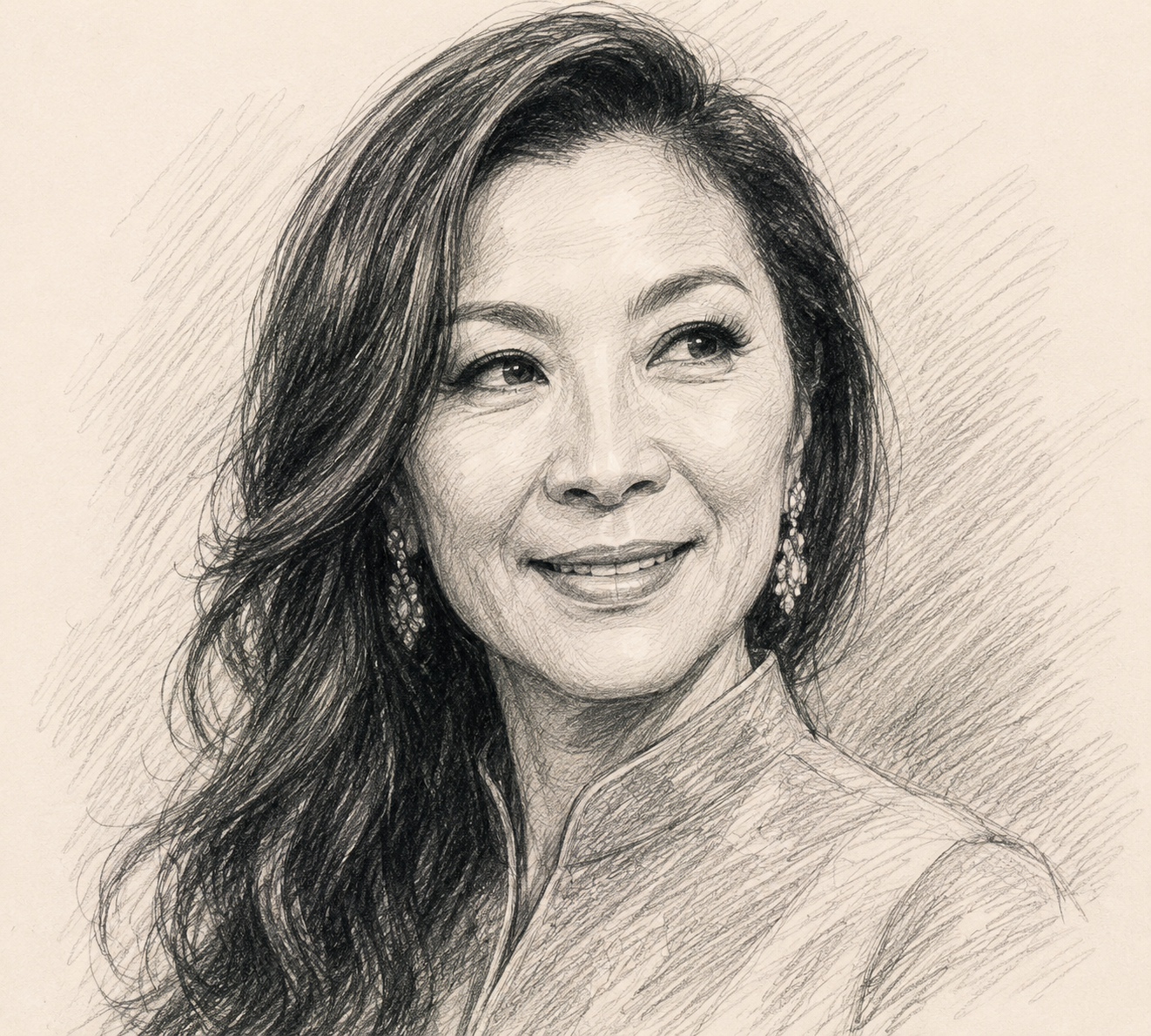
Nine days after a magnitude-7.8 earthquake killed nearly 9,000 people in Nepal in April 2015, Michelle Yeoh was not on a film set. She was in the Kathmandu Valley with volunteers from Live to Love International, loading tarpaulin and rice onto trucks bound for Nuwakot and Sindhupalchok, two districts where entire hillside villages had folded into rubble. She had already wired 100,000 euros to the group's emergency fund. "The first priority is to provide shelter for people before the monsoon season begins," she told the Kathmandu Post that May, standing in a warehouse of donated supplies. "Then we will involve ourselves in helping to rebuild lives and restore what was lost."
That trip predates her United Nations title by a year, but it explains it. In 2016 — the year the UN's Sustainable Development Goals took effect — the UN Development Programme named Yeoh a Goodwill Ambassador. It is an unpaid, largely ceremonial post that dozens of actors, musicians and athletes have held since the 1950s, and most hold it for a few years before moving on. Yeoh has now held hers for nine, longer than all but a handful of her UN peers, spanning an Oscar win, a Marvel franchise, and a UN mandate that has aged, if anything, into sharper relevance: ending inequality, advancing gender equality, and reducing poverty, with a recurring focus on how disasters compound all three.
The Nepal connection did not end with the relief convoys. As Goodwill Ambassador, Yeoh returned to Kathmandu to address Nepal's Parliament directly, pressing lawmakers on disaster risk reduction and the implementation of the Global Goals at a moment when reconstruction had stalled and hundreds of thousands of families were still living under temporary shelter. It was a smaller, less photographed appearance than her later red-carpet advocacy — no film crew, a parliamentary chamber instead of a stage — and it set a pattern UNDP officials still point to: she goes back to the places, not just the podiums.
"Crises aren't just moments of catastrophe: They expose deep existing inequalities. Those living in poverty, especially women and girls, bear the brunt." — Michelle Yeoh, The New York Times, March 2023
That line comes from an opinion essay Yeoh published in the New York Times the day after her historic best-actress Oscar win in March 2023, under the headline "The Crisis That Changed My Life 8 Years Ago Keeps Happening." She used the platform of the biggest night of her career to write not about the film industry but about Nepal, arguing that disaster response fails women first because it is rarely designed with them in mind — a thesis drawn directly, and explicitly, from what she had watched happen eight years earlier.
Not Every Appearance Is Solemn
Not all of Yeoh's UN work carries that weight, and UNDP has leaned on the contrast deliberately. In 2016, she traveled to the Chengdu Research Base of Giant Panda Breeding to help launch "Pandas for the Global Goals," fronting a global competition in which the public could name two newborn cubs by picking one of the 17 Global Goals and explaining, on video, why it mattered. Yeoh announced the winning names live at that year's Social Good Summit. It is an easy campaign to dismiss as mascot marketing, and it was designed, transparently, to be shared — but UNDP's own reasoning was that a wildlife-and-climate hook travels further with a general audience than a policy briefing does, and pairing it with a genuine global movie star gave it distribution a UN agency could not otherwise buy.
That tension — sincerity versus spectacle — is the standing critique of the celebrity-ambassador model UNDP and its sister agencies rely on: roughly two dozen actors, musicians and athletes hold similar titles across the UN system at any given time, almost none of them development specialists, and independent evaluators have long questioned how much measurable impact a red-carpet appearance actually buys against a mandate as broad as ending global poverty. UNDP does not publish attribution data tying Yeoh's specific appearances to funding or policy outcomes, and by the position's own design, none is expected; her value to the agency is awareness and access, not program delivery. What distinguishes her file from most is frequency and duration — nine years of recurring, unpaid appearances, including ones with no film to promote.
The Programs Behind the Ambassador
The institution Yeoh represents has its own, separate record in the region she keeps returning to, and it is worth stating plainly whose numbers these are: they belong to UNDP's country offices and partners, not to Yeoh. In Bangladesh, UNDP's Local Government Initiatives on Climate Change project has channeled climate-adaptation grants to more than 1.1 million people, with over 98 percent of household grants going directly to women in flood- and salinity-prone coastal districts, funding work from crab farming to home vegetable enterprises, UNDP reports. In Thailand, indigenous women trained under UNDP's Adaptation Innovation Marketplace in climate-smart silk production went on to elect their village's first-ever woman head. In China, UNDP's Rural Digital Finance Initiative has mobilized more than $20 million for over 7,000 small businesses, prioritizing women-owned enterprises. And in India, UNDP-linked solar-powered cold storage units run by women's cooperatives have improved crop storage and strengthened women's bargaining position in local markets.
The gap UNDP itself flags is financing, not ambition: across Asia-Pacific, only 2.9 percent of climate-related development finance is directed at gender equality, according to the agency's own analysis, even as its research estimates that closing gender gaps in agriculture and climate adaptation could unlock more than $1 trillion in global GDP. That is the arithmetic Yeoh's advocacy sits on top of — a well-documented, chronically underfunded portfolio of local projects that a Goodwill Ambassador cannot fund, but can put in front of an audience an agency communications office cannot reach alone.
In 2025, National Geographic named Yeoh to its "Nat Geo 33," its annual list of visionaries and adventurers, citing her advocacy for women in crisis alongside her acting career — recognition that treats the UN role as inseparable from the public figure rather than a charitable footnote to it. Asia-Pacific remains, by UNDP's own description, one of the most disaster-prone regions on earth, which means the appointment that began with an earthquake in 2015 has had no shortage of reasons to continue. Nine years in, Yeoh has outlasted three UNDP administrators and dozens of fellow ambassadors. She has not, notably, stopped going back.