
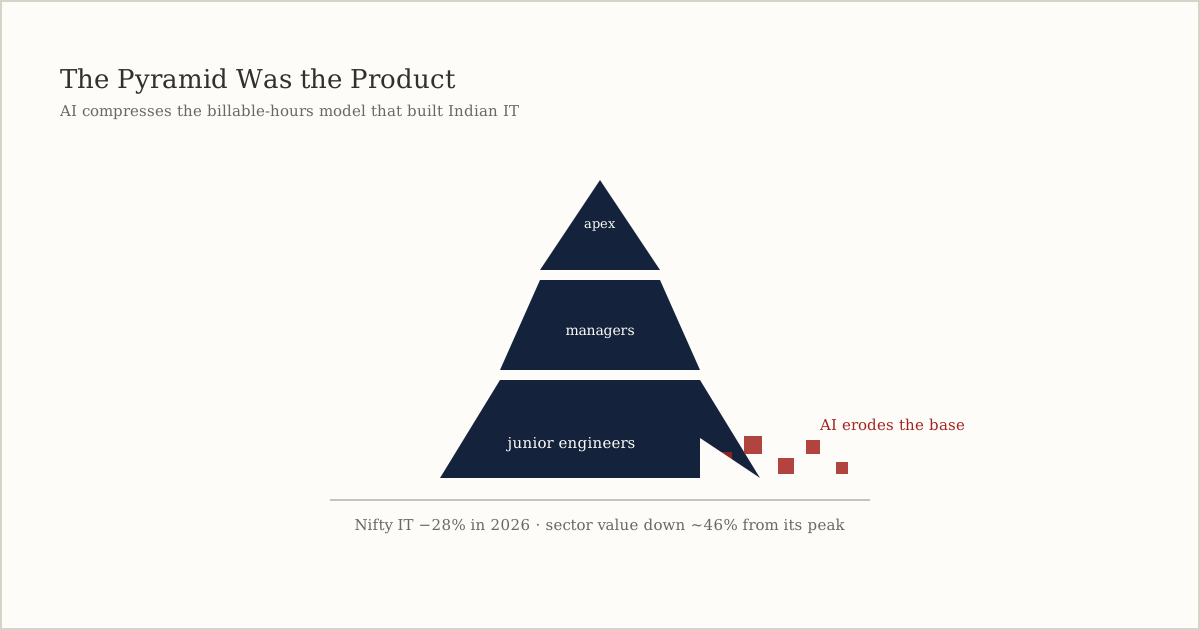
The Indian IT-services model has a shape, and the shape is a pyramid. A wide base of junior engineers, hired by the tens of thousands each year, does the coding and testing and maintenance that clients pay for by the hour; a narrower tier of managers sits above them; a thin apex owns the client relationships. For thirty years, that structure turned India's supply of graduates into one of the world's great export businesses. Generative AI attacks it at the base.
The market has already drawn its conclusion. The Nifty IT index fell around 28 percent through 2026, the worst-performing sector on the Indian market. The combined market capitalization of the top firms — Tata Consultancy Services (TCS), Infosys, Wipro, HCL Technologies and Tech Mahindra — dropped more than 46 percent from its 2024 peak. Investors are not betting that AI will end Indian IT. They are repricing the specific mechanism by which it made money.
That mechanism is billable hours. If an AI tool lets one engineer do the work that used to take three, a firm paid by the hour or by the head is selling less of exactly what it sells. The industry's own executives have named the effect. HCL's chief executive, C. Vijayakumar, has spoken of "AI deflation," warning that it could pull revenue down by three to five percent in the coming year and possibly more after that. The chairman of TCS has gone further, suggesting AI agents may eventually match the number of human employees — an extraordinary thing for the head of a company built on human headcount to say out loud.
Not a jobs story, a pricing story
The familiar framing — will AI take Indian jobs — misses where the pressure actually lands. The threat is not mass unemployment first; it is margin. When AI raises each engineer's productivity, clients expect to pay less, and in a competitive market the productivity gain is passed to the customer rather than kept as profit. Muted global technology budgets have sharpened that dynamic, leaving firms competing on price into weakening demand. Brokerages including Nomura, Citi and JPMorgan have described a "perfect storm" of AI pricing pressure, soft client spending and geopolitical uncertainty; first-quarter constant-currency revenue growth was projected at just 2.8 percent.
The pyramid was the product. AI does not need to eliminate the base to break the model — it only needs to make the base cheaper to replace than to bill.
The deeper vulnerability is structural. If the entry-level tier shrinks because AI does entry-level work, the pyramid loses the wide base that trained the next generation of managers and, eventually, the apex. A model that depended on continuously converting cheap junior labor into experienced senior talent does not have an obvious replacement for the rungs AI removes.
From selling labor to owning products
The way out is the one the industry has discussed for years without fully committing to it: stop selling technology labor and start owning technology products and intellectual property. A firm that builds and licenses its own software, or its own AI tools, is not undone when the price of an engineer-hour collapses, because it is no longer selling engineer-hours. But that transition asks Indian IT to become a different kind of company — to compete on product, not cost, against exactly the American platforms whose AI is deflating its current business.
The rupee has masked some of the strain; currency depreciation lifted headline revenues even as underlying growth stalled. Underneath, the question is whether firms that spent three decades perfecting the arbitrage of cheap, skilled labor can pivot to owning the tools that make that labor cheaper. The market has priced in doubt. What the next several earnings seasons will reveal is whether the doubt is about the timing of the transition, or about whether it can be made at all.