
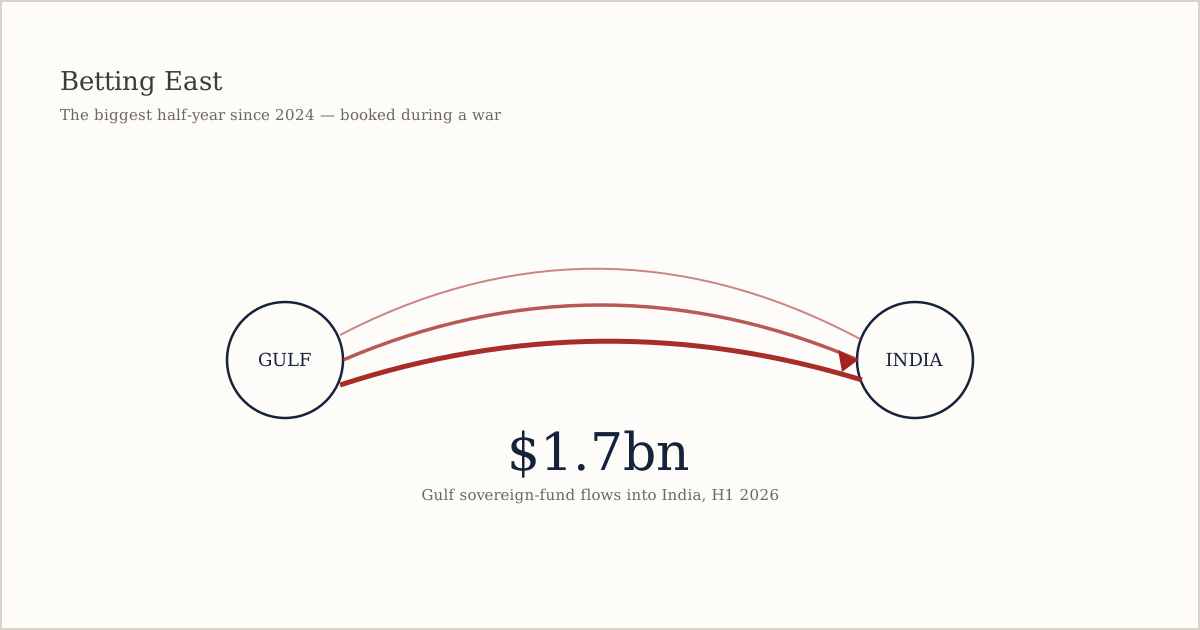
The war was supposed to make them careful. Instead the checks got bigger.
Gulf sovereign wealth funds put $1.7 billion into India in the first half of 2026, the highest half-year total since 2024, according to figures compiled from deal disclosures. What makes the number striking is its timing. It accumulated not in a calm year but through a regional war that closed airspace, spooked shipping and sent oil traders reaching for the panic button. The conventional read is that conflict scares capital home. The Gulf did the opposite.
Ask why India, and the answers start with what the Gulf no longer wants to be. For fifty years the region's surplus dollars flowed west — into US Treasuries, London property, European football clubs and the occasional trophy bank stake. Those are financial positions: buy, hold, collect. The money going into India is different in kind. It funds things that have to be built and operated — ports, toll roads, solar parks, data centers, payment networks — assets that tie the investor to the country for a decade or more.
From financier to partner
Funds such as the Abu Dhabi Investment Authority (ADIA), Mubadala and Saudi Arabia's Public Investment Fund (PIF) have shifted from taking minority stakes to anchoring platforms: infrastructure trusts, renewable-energy joint ventures, logistics roll-ups. The distinction matters. A financial investor asks what a stake is worth today. A strategic one asks what a supply chain, a grid or a port will be worth to its own economy in 2035.
India offers three things the Gulf is short of at home: a large and young domestic market, a renewable build-out at industrial scale, and a digital economy that has already moved a billion people onto rails the state helped lay. For a region trying to invest its way out of oil dependence before the oil age ends, those are not portfolio characteristics. They are hedges against its own future.
The Gulf isn't buying Indian assets. It's buying a position in the economy it expects to need most.
The renewables logic is the cleanest example. A Gulf fund that backs Indian solar is not only chasing a return; it is learning to operate the technology it will have to deploy across its own deserts, while locking in a relationship with a market that will keep buying panels, power and green hydrogen for a generation. Logistics works the same way. Money into Indian ports and warehouses is money spent understanding the corridor that increasingly connects the Gulf to Asian demand.
None of this makes the bet safe. India's regulatory turns can be abrupt, land is hard to assemble, and the rupee has a long memory for disappointing foreign investors. The war itself is a reminder that the Gulf's own neighborhood can turn violent with little warning — which is precisely the risk these funds are trying to diversify away from.
That may be the real signal in the $1.7 billion. It was not the behavior of investors who felt safe. It was the behavior of investors who had decided that staying put was the greater risk.