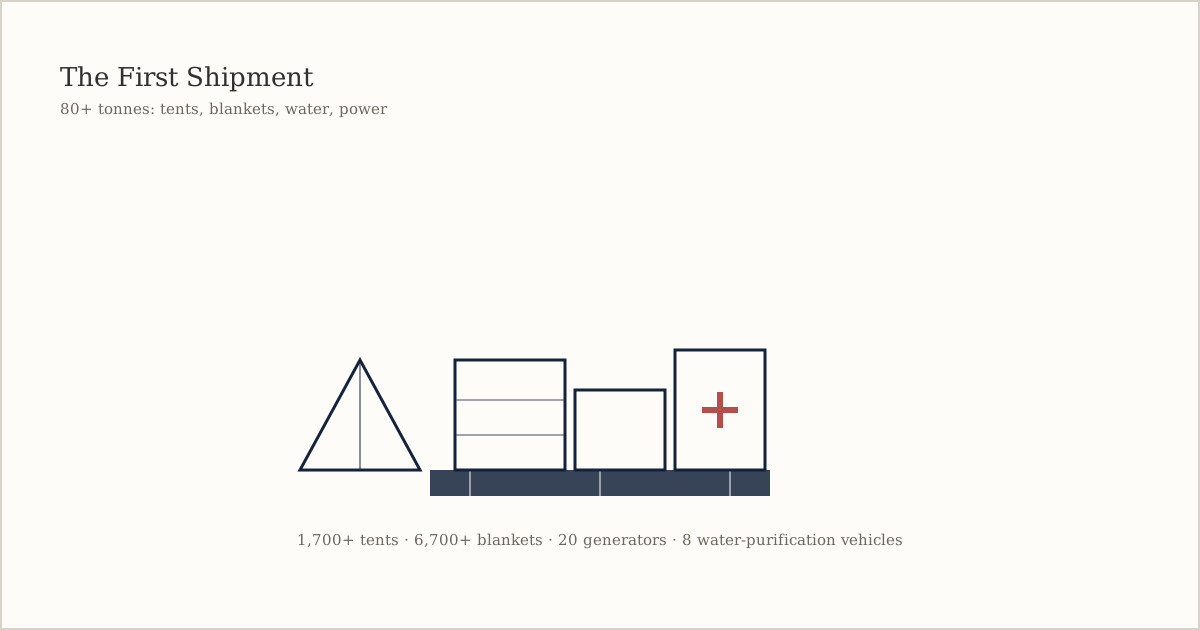
The load that left Beijing Capital International Airport for Venezuela late in June reads, item by item, like an inventory of what a disaster takes away. More than 1,700 tents. Over 6,700 blankets. Twenty generators. Eight water-purification vehicles. Two hundred solar lighting units and two hundred disinfection machines. Together the first shipment weighed more than 80 tonnes—the opening delivery of China's response to two earthquakes that killed over 1,400 people across northern Venezuela in June.
The physical supplies were the visible part of a larger package. Beijing's foreign ministry said the government would provide $14.7 million, 100 million yuan, in disaster relief, alongside a rescue team, medical support and satellite imagery of the affected areas to help Venezuelan responders map the damage. China framed the effort in the language of humanitarian assistance rather than geopolitics, and moved quickly: the pledge came within days of the quakes, the cargo not long after.
China was not alone. The United States also pledged relief, as did other governments—a reminder that disaster response, for all the goodwill it generates, is rarely a solo act, and that the countries offering it are usually aware of the credit that follows. Venezuela, isolated from much of the West and long inside Beijing's economic orbit, was always likely to see China near the front of the line.
Together the first shipment weighed more than 80 tonnes, the opening delivery of China's response to two earthquakes that killed over 1,400 people across northern Venezuela in June.
What is worth noticing is the pairing. For two decades China's presence in the developing world has been read mostly through hardware—ports, railways, power plants, loans. The relief flight points to a second track running alongside the first: a capacity to respond fast when a partner country is hit, with the logistics and the airlift to back the promise. Water-purification trucks and portable generators are not the stuff of summit communiqués, but they are what a flooded city needs in the first week, and being the government that delivers them leaves an impression that a bridge cannot.
Whether relief hardens into lasting influence is never guaranteed; gratitude fades, and the rebuilding contracts that follow a disaster are where the real positioning happens. For now the ledger is simpler than that. More than 1,400 people are dead, a country needs shelter and clean water before anything else, and one of the first heavy-lift flights to arrive came from the other side of the planet.