
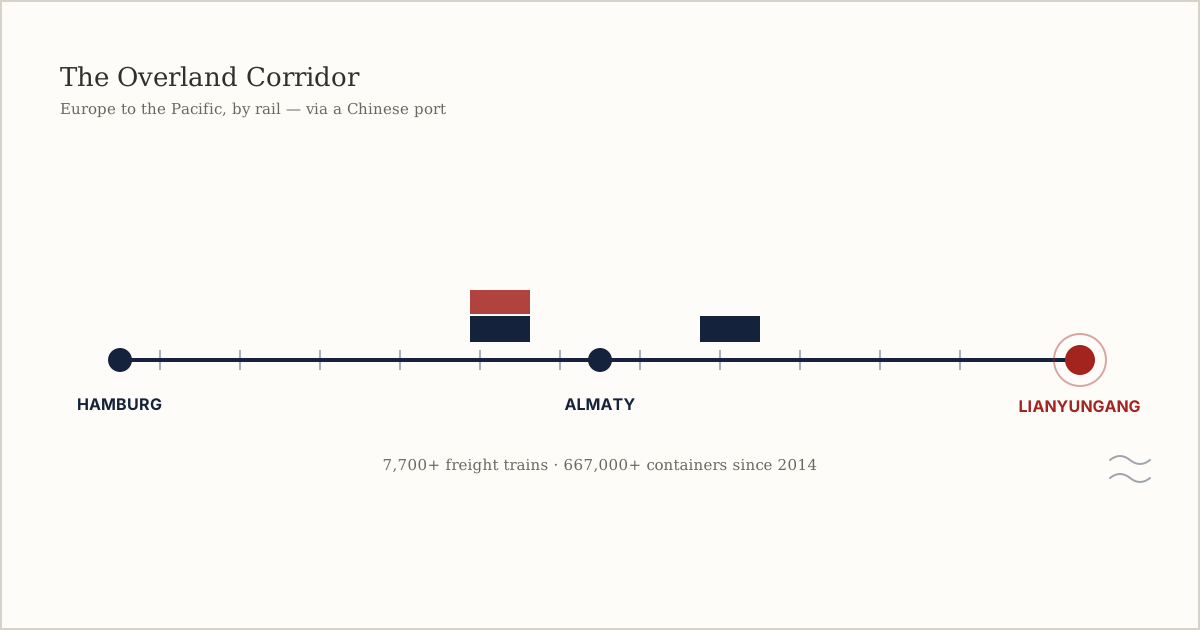
Kazakhstan is the largest landlocked country on earth. From its capital, the nearest open ocean is well over 3,000 kilometers away in almost any direction—a geographic fact that has shaped its trade for as long as it has existed. So the most revealing thing about the China-Kazakhstan (Lianyungang) Logistics Cooperation Base is not its container throughput. It is the address. Kazakhstan's berth on the Pacific sits on the coast of Jiangsu province, in a Chinese port city most of the world has never heard of.
Opened in 2014, the base was the first physical project built under the Belt and Road Initiative, not an announcement or a memorandum, but poured concrete and rail track. The arrangement is simple and unusual: a jointly operated yard where Kazakh grain, metals and manufactured goods are consolidated, loaded and shipped onward by sea from Lianyungang, while European and Asian cargo moves the other way by rail toward Almaty and beyond. For a country with no coastline, it functions as an outsourced seaport, 3,000 kilometers from home.
The volumes have grown into something substantial. By the spring of 2026 the base had dispatched more than 7,700 China-Europe and Central Asia freight trains since opening, carrying upward of 667,000 twenty-foot containers, according to figures reported through Chinese customs. In the first weeks of 2026 alone it moved more than 20,000 containers across some 240 trains—one of them, on New Year's Day, loaded entirely with automotive parts bound west.
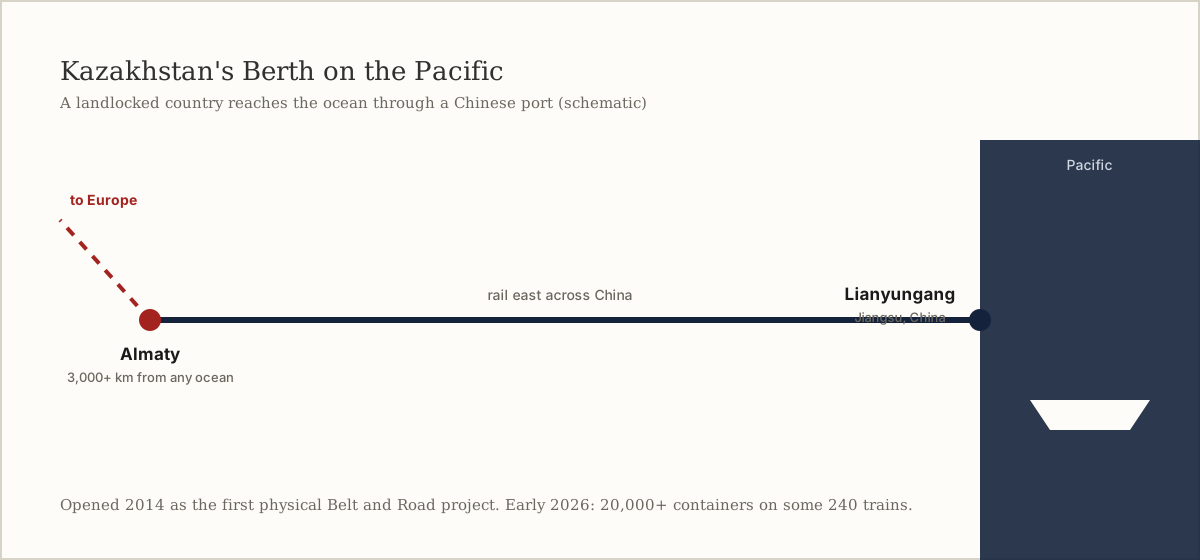
A country with no coastline runs part of its export economy through a port it does not own, on the far side of another country, and the arrangement has held for more than a decade.
What makes the corridor work is time. A container moving by rail between China and Europe crosses the distance in roughly half the days a ship needs around the southern capes, and the overland route sidesteps the maritime chokepoints—the Red Sea, the Malacca Strait—that have turned unpredictable in recent years. It costs more than the sea and carries less. But for a certain class of cargo—car parts, electronics, anything where a fortnight saved is worth the premium—the math favors the train.
The dependency runs in both directions, which is the part that gets less attention. Beijing gains a Belt and Road project it can point to, and a western trade artery that never touches the ocean. Astana gains a functioning outlet to global markets it could never build on its own soil. Neither can easily walk away: the grain silos, the customs arrangements and the rail schedules are now wired together across a border. That is a quieter kind of infrastructure diplomacy than a headline megaproject, and possibly a more durable one.
The base's operators talk about pushing volumes higher still, and about new lines fanning out toward the Caucasus and the Gulf. Whether the overland corridor keeps growing or plateaus will depend less on ceremony than on the same thing it always has—whether a container from Almaty still reaches Hamburg faster by rail than by sea. For now, the fastest way out of the world's largest landlocked country runs east, to the water.